
Front-End Programming(Front-End Web Development)
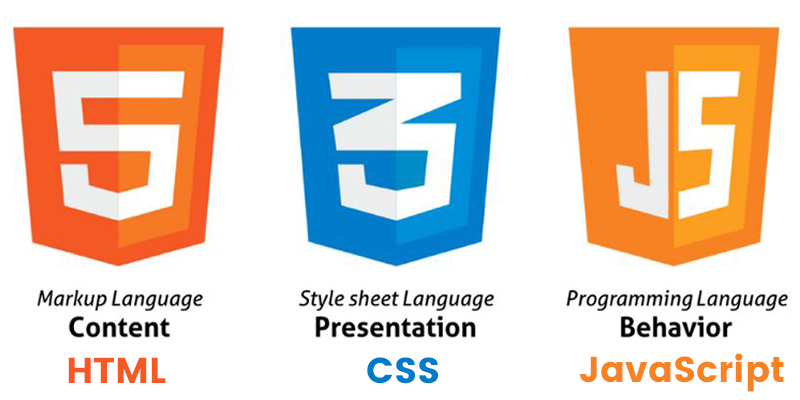
Front-end programming refers to developing the parts of a website or application that users directly interact with. It focuses on creating and optimizing the visual and interactive aspects of web applications to ensure an engaging and seamless user experience.
Front-end programming/web development is the skill used to build the part of a website that people see and use. It involves HTML, CSS, and JavaScript—the tools that control how a website looks, loads, and responds when users click or scroll.
If you’ve ever visited a website and liked how it looks or how easy it was to use, that’s the work of a front-end developer. You can learn more about front-end basics on MDN Web Docs, a trusted global resource for developers (https://developer.mozilla.org/en-US/docs/Learn/Front-end_web_developer).
Why Is Front-End Programming Important?
In Nigeria today, almost every business needs an online presence. A good website helps a business look serious and trustworthy.
Front-end programming helps to:
Make websites look clean and professional
Improve user experience so visitors don’t get frustrated
Ensure websites work well on phones, tablets, and laptops
Support accessibility standards recommended by the W3C (https://www.w3.org/WAI/standards-guidelines/wcag/)
Benefits of Learning Front-End Development
Front-end development is one of the easiest tech skills to start with:
You see results immediately as you code
It’s in high demand locally and internationally
You can work remotely or freelance
You don’t need expensive equipment—just a laptop and internet
You can learn Front end programming in Port Harcourt or online via Myteacher Institute
Job Opportunities in Front-End Development
Front-end developers can work:
In tech companies and startups
With digital and creative agencies
As remote staff for foreign companies
As freelancers handling client projects
Job openings are often posted on LinkedIn Jobs (https://www.linkedin.com/jobs/front-end-developer-jobs/).
How Nigerians Can Make Money With Front-End Skills
Front-end development is not just for office jobs. Many Nigerians earn daily and monthly income using this skill.
You can:
Build websites for small businesses and startups
Freelance on platforms like Upwork (https://www.upwork.com) and Fiverr (https://www.fiverr.com)
Work remotely and earn in dollars
Create and sell website templates on platforms like ThemeForest (https://themeforest.net)
You can start your own digital agency
Outline:
Week 1: Introduction to Front-End Development
Overview of front-end development
Understanding the structure of a website
Tools for front-end developers (code editors, browsers, and version control systems)
Setting up your development environment
Week 2: HTML (HyperText Markup Language)
Basics of HTML: elements, tags, and attributes
Structuring content with headings, paragraphs, and lists
Creating links and adding images
Forms and inputs
Week 3: CSS (Cascading Style Sheets)
Styling basics: selectors, properties, and values
CSS box model and layout techniques
Introduction to Flexbox and Grid layout
Responsive design and media queries
Week 4: JavaScript Basics
Introduction to JavaScript and its role in front-end development
Variables, data types, and operators
Functions, events, and DOM manipulation
Basic debugging and error handling
Week 5: Advanced CSS and Frameworks
Animations and transitions in CSS
Introduction to CSS preprocessors (SASS/LESS)
Using CSS frameworks (e.g., Bootstrap, Tailwind CSS)
Best practices for maintaining styles
Week 6: Advanced JavaScript
Working with APIs and fetching data
Introduction to ES6+ features (arrow functions, promises, template literals)
JavaScript frameworks and libraries overview (e.g., React.js, Vue.js)
Basic introduction to state management
Week 7: Project Workflow and Tools
Version control with Git and GitHub basics
Setting up and using task runners/build tools (e.g., Webpack, Vite)
Deploying front-end projects online (e.g., Netlify, GitHub Pages)
Collaboration tools for team projects
Week 8: Capstone Project
Building a complete responsive website
Integrating HTML, CSS, and JavaScript skills
Presenting and receiving feedback
Course wrap-up and next steps in front-end development
Why you must learn this skill:
Virtually all apps and websites you use are developed by software developers, of which front end developers are the front men. As long as the need for softwares and applications keep growing, the demand for front end developers will continue to grow. Learning front-end programming is crucial for securing remote jobs, as it’s in high demand across various industries. It allows you to work from anywhere, offering flexibility and access to global opportunities. With the ability to create engaging websites, front-end developers can earn competitive salaries, both as freelancers or full-time remote employees.
Learn front-end programming in Port Harcourt, Lagos, Abuja, and worldwide, online, on-site, and in person. Contact Myteacher Institute today
Duration: 8 weeks
Fees: N150,000 not N200,000
Instructor

After completing both the Front-End and Back-End courses at Myteacher Institute, I can confidently say that these courses have significantly enhanced my web development skills. The comprehensive curriculum covered everything from basic HTML, CSS, and JavaScript to advanced topics in React, Node.js, and database management. I greatly recommend Myteacher Institute "
-Charles Faustin